
Division of Religion, Humanities, and Social Sciences
The Division of Religion, Humanities, and Social Sciences offers a range of majors designed to prepare students for careers with a broad understanding of society, spirituality, and culture.

The Division of Religion, Humanities, and Social Sciences offers major degree programs in Christian education, criminal forensics, criminal justice, English, English/secondary education, liberal studies, mass communications, pastoral ministry, sociology, and social studies/secondary education. Students may also choose an undergraduate minor from these areas as well as minors in criminal forensic studies, religion, history, political science, gerontology, international relations, minority studies, music, and psychology.
Majors
Students who pursue a major in Christian Education take a program of course work that focuses on church history, principles of religious worship, studies of the Old and New Testament of the Holy Bible, as well as basic aspects of church administration and leadership. Classroom work is supplemented with a formal internship where students put the concepts and principles they have learned into practice within a religious organizational setting under professional supervision. Graduates of the Christian education program usually pursue professional careers as leaders and managers in religious and non-profit organizations.
Learning Outcomes
Upon completion of the Christian Education degree program, graduates will:
- Demonstrate knowledge of basic concepts in the various theologies of the Old and the New Testament.
- Illustrate an understanding of various administrative functions and duties as well as the elements of effective leadership within the Baptist Church.
- Define church polity with a special emphasis on the principles governing the Baptist Church.
- Identify the prophets of Israel and articulate the impact of their prophetic principles.
- Research and compose critical and analytical writings on various topics, themes, and motifs.
- Demonstrate a knowledge of the history, theories, and basic principles of Christianity, the Christian Church, and Christian education.
- Demonstrate an understanding of the practical application of the major course content.
| Course | Credits |
|---|---|
| General Education | 49 |
| Major Courses | 39 |
| REL 300 Introduction to Christian Education | 3 |
| REL 301 Church History | 3 |
| REL 302 Principles of Worship | 3 |
| REL 303 The Prophets | 3 |
| REL 304 Theology of the Old Testament | 3 |
| REL 305 Theology of the New Testament | 3 |
| REL 306 Black Church Studies | 3 |
| REL 311 Church Administration | 3 |
| REL 312 Principles of Christian Education | 3 |
| REL 315 Baptist Polity | 3 |
| REL 318 Theology and Christian Thought | 3 |
| REL 402 Christian Leadership Seminar | 3 |
| REL 415 Internship | 3 |
| Other Required courses | 7 |
| ENG 310 Advanced Composition and Rhetoric | 3 |
| JRS 300 Junior Seminar | 1 |
| MUS 330 Church Music | 3 |
| Minor | 18 |
| Electives | 9 |
| TOTAL | 122 |
Contact:
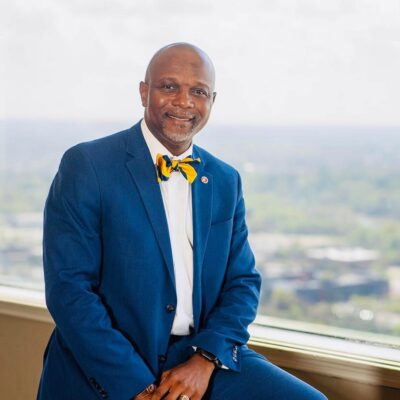
The Rev. Dr. Cecil Bromell
Assistant Professor
803-934-3033
[email protected]
Students majoring in Criminal Justice combine the study of theory and philosophical principles related to the causes, punishment, and prevention of criminal behavior in society with practical knowledge of how the various parts of the criminal justice system function. Classroom study is combined with a hands-on application of theory and principles through a state-of-the-art criminal forensics laboratory, field experiences as well as formal internships with various law enforcement agencies conducted under professional supervision. Graduates of the Criminal Justice program usually pursue professional careers in various areas of law enforcement, government, law, security and investigative services, education as well as the private sector.
Student Learning Outcomes for Criminal Justice
Upon completion of the Criminal Justice degree program, graduates will:
- Demonstrate knowledge of major terms and definitions used in the study of crime and the criminal justice system.
- Identify the principal theories on the causes of crime and the major concepts used in the study of the criminal justice system.
- Identify the various parts of the criminal justice system and the function of each part.
- Apply concepts, theory and specific practices used in criminal justice within a workplace environment.
- Be able to relate theory, concepts, and practices to current issues in the field of criminal justice through conducting computer-based and quantitative research.
- Demonstrate sufficient levels of academic preparation and related skills to successfully pursue professional employment.
| Course | Credits |
|---|---|
| General Education | 49 |
| Major Courses | 33 |
| CRJ 300 Introduction to Criminal Justice | 3 |
| CRJ 301 Law Enforcement Systems | 3 |
| CRJ 302 Corrections, Probation, Pardon and Parole Systems | 3 |
| CRJ 303 Judicial Systems | 3 |
| CRJ 304 Criminal Law | 3 |
| CRJ 305 Criminology | 3 |
| CRJ 400 Juvenile Delinquency | 3 |
| CRJ 401 Criminal Investigation | 3 |
| CRJ 402 Special Problems in Administration of Justice | 3 |
| CRJ 403 Internship | 3 |
| CRJ 404 Criminal Forensics | 3 |
| Other Required Courses | 13 |
| JRS 300 Junior Seminar | 1 |
| PSC 304 American National Government | 3 |
| SSC 401 Introduction to Social Research | 3 |
| SPA 201 Intermediate Spanish I | 3 |
| SPA 202 Intermediate Spanish II | 3 |
| Minor Courses | 18 |
| Electives | 9 |
| TOTAL | 122 |
Students majoring in English seek to become highly proficient in communication, creativity, critical thinking and analytical skills that can be used across a variety career fields and specific job tasks. Because they can effectively articulate as well as analyze facts and ideas, conduct research and engage in specialized writing in a number of different areas, English majors often pursue careers in vocations such as teaching, law, public relations, human resources management and library/information systems management.
Learning Outcomes
Upon completion of the English degree program, graduates will:
- Demonstrate a knowledge of diverse literature and genres from the Ancient World to the 21st Century.
- Analyze literary works; summarize and evaluate literary content, periods, language, and locations; compare and contrast literature with similar works from various times and locations.
- Evaluate a work of literature within the framework of the author’s intent without making moral judgments.
- Utilize basic library skills in the composition of essays, research papers, and other written assignments.
- Articulate orally and clearly factual information, ideas, and opinions regarding literature and the English language.
| Course | Credits |
|---|---|
| General Education | 49 |
| Major Courses | 36 |
| ENG 305 American Literature I | 3 |
| ENG 306 American Literature II | 3 |
| ENG 307 World Literature I | 3 |
| ENG 308 World Literature II | 3 |
| ENG 310 Advanced Composition and Rhetoric | 3 |
| ENG 311 History of the English Language | 3 |
| ENG 312 Modern English Grammar | 3 |
| ENG 405 Shakespeare | 3 |
| ENG 412 British Literature I | 3 |
| ENG 413 British Literature II | 3 |
| ENG 415 Literary Criticism | 3 |
| ENG 490 English Seminar | 3 |
| Other Required courses | 10 |
| ENG 309 Major Novels | 3 |
| ENG 322 Twentieth Century Literature | 3 |
| JRS 300 Junior Seminar | 1 |
| SPH 201 Public Speaking | 3 |
| Minor | 18 |
| Electives | 9 |
| TOTAL | 122 |
Students enrolled in this degree program study in preparation for careers as teachers in the secondary schools grades 9-12. Courses focus on understanding as well as effectively teaching elements of grammar and composition, along with the ability to analyze literary works. Along with an emphasis on composition and literary analysis, the English/Secondary Education major also focuses on providing students specialized instruction on theories of learning, methods of teaching and measuring student learning in the secondary school setting.
Learning Outcomes
- Identify, interpret, understand, and develop approaches to teaching major works of literature.
- Understand the principles, history, elements, conventions, and development of language and linguistics.
- Understand, evaluate, and teach elements of composition and rhetoric.
- Analyze literature and evaluate rhetorical features in literary essay.
| Course | Credits |
|---|---|
| General Education | 49 |
| Major Courses | 27 |
| ENG 305 American Literature I | 3 |
| ENG 306 American Literature II | 3 |
| ENG 307 World Literature I | 3 |
| ENG 310 Advanced Composition and Rhetoric | 3 |
| ENG 312 Modern English Grammar | 3 |
| ENG 405 Shakespeare | 3 |
| ENG 412 British Literature I | 3 |
| ENG 413 British Literature II | 3 |
| ENG 415 Literary Criticism | 3 |
| Other Required Courses | 11 |
| HIS 304 American History I or HIS 305 American History II | 3 |
| JRS 300 Junior Seminar | 1 |
| SSC 100 Contemporary Affairs | 1 |
| Foreign Language | 6 |
| Professional Education | 33 |
| EDU 215 Human Growth and Development | 3 |
| EDU 251 Foundations of Education | 3 |
| EDU 302 Educational Psychology | 3 |
| EDU 304 Educational Assessment and Evaluation | 3 |
| EDU 322 Foundations of Reading | 3 |
| EDU 405 Educational Seminar | 3 |
| EDU 409 Reading and Writing in the Content Areas | 3 |
| EDU 412 Observation and Directed Teaching | 9 |
| EDU 415 Curriculum, Instruction, and Assessment in Secondary School English | 3 |
| Electives | 6 |
| TOTAL HOURS | 126 |
Covering several fields of study, the Liberal Studies major is one of the most flexible degree programs that a student can choose to undertake. Combining course work in areas such as biology, mathematics, history, political science, psychology, art, music, English and communications, Liberal Studies gives students exposure to knowledge from a wide array of subjects as part of enhancing their thinking and problem-solving skills. This enables them to be successful in a variety of career fields.
Learning Outcomes
Upon completion of the Liberal Studies degree program, graduates will:
- Demonstrate a knowledge of basic concepts in the various theologies of the Old and the New Testament.
- Identify terms and concepts related to the study of various disciplines in humanities.
- Discuss social issues relationally, logically, reasonably and critically in formal and informal situations.
- Think more critically and exhibit a cultivated spirit of inquiry.
- Articulate an understanding of and an appreciation for the way various disciplines are connected and contribute to the enlightenment of mankind.
- Demonstrate an understanding of the various career and graduate school options associated with a liberal studies major.
| Courses | Credits |
|---|---|
| General Education | 49 |
| Major Courses (A minimum of eighteen hours each from the course offerings of any two of the following course groups) | 36 |
| Natural Sciences and Mathematics | |
| BIO 200 Anatomy and Physiology for Health Sciences | 4 |
| BIO 204 General Botany | 4 |
| BIO 205 General Microbiology | 4 |
| MAT 206 Introductory Probability and Statistics | 3 |
| Select three additional hours from the Natural Sciences and Mathematics course groups (courses with BIO, CHM, CSC, MAT, PHY prefixes) |
3 |
| Social Sciences | |
| HIS 402 Twentieth Century United States | 3 |
| PSC 306 State and Local Government | 3 |
| PSY 401 Applied Psychology | 3 |
| PSY 402 Organizational and Industrial Psychology | 3 |
| Select six additional hours from the Social Sciences course groups (courses with CRJ, HIS, PSC, PSY, SOC, SSC prefixes) |
6 |
| Religion and Humanities | |
| ENG 310 Advanced Composition and Rhetoric | 3 |
| ENG 415 Literary Criticism | 3 |
| MED 300 Mass Communications | 3 |
| MED 401 Public Relations | 3 |
| Select six additional hours from the Religion and Humanities course groups (courses with prefixes ART, ENG, MED, MUS, REL, SPH) |
6 |
| Other Required courses | 4 |
| HUM 400 Liberal Studies Seminar | 3 |
| JRS 300 Junior Seminar | 1 |
| Minor Courses | 18 |
| Electives | 18 |
| TOTAL | 125 |
Students studying Mass Communications take a variety of courses in journalism, photography, broadcast media, advertising, and public relations. Additionally, Mass Communications majors are required to complete an internship for graduation and have a number of hands-on opportunities to operate the radio, television, and photography laboratories. Many of our graduates find immediate employment in television, radio, newspaper, and other media markets throughout the nation.
Learning Outcomes
Upon completion of the Mass Communications degree program, graduates will:
- Demonstrate an understanding of mass communications theories, functions, and influences on individuals and the public.
- Illustrate the various research methods in mass media and apply those methods in the preparation of media research studies.
- Prepare newspaper advertisements, radio and television commercials, newsletters, and promotional packages.
- Describe techniques and principles of effective announcing.
- Proofread, edit, and design layouts for publications.
- Gather news and write and report news stories for print and electronic media.
- Articulate ethical considerations in mass media.
- Demonstrate an understanding of the practical application of the major course content.
| Courses | Credits |
|---|---|
| General Education | 49 |
| Major Courses | 36 |
| MED 300 Mass Communications | 3 |
| MED 302 News Writing and Editing | 3 |
| MED 304 Advertising | 3 |
| MED 320 Television Production | 3 |
| MED 341 Broadcast Announcing | 3 |
| MED 351 Writing for the Media | 3 |
| MED 360 Basic Sound Recording | 3 |
| MED 361 Media Law and Ethics | 3 |
| MED 362 Media Research Methods | 3 |
| MED 401 Public Relations | 3 |
| MED 410 Advanced Media Project | 3 |
| MED 490 Internship | 3 |
| Other Required courses | 4 |
| JRS 300 Junior Seminar | 1 |
| MED 331 Basic Photography | 3 |
| Minor | 18 |
| Electives | 15 |
| TOTAL | 122 |
Suggested Electives:
| Courses | Credits |
|---|---|
| MED 307 History of Journalism | 3 |
| MED 321 Advanced TV Production | 3 |
| MED 330 Scriptwriting | 3 |
| MED 332 Advanced Photography | 3 |
| MED 350 Radio Programming and Production | 3 |
| MED 402 Advanced News Writing and Editing | 3 |
| MED 405 Newspaper Organization | 3 |
The Pastoral Ministry major at Morris College is specifically designed for those students who are called to a professional career in the ministry. Courses are designed to give students a sound foundation of biblical knowledge as well as an ability to articulate the social teachings of Jesus Christ as central to the fundamental principles upon which the Christian Church is based. Classroom work is supported by activities that provide students an understanding of the administrative operations of the Church, including the roles of ministers as both spiritual and organizational leaders.
Learning Outcomes
Upon completion of the Pastoral Ministry degree program, graduates will:
- Demonstrate knowledge of basic concepts in the various theologies of the Old and New Testament.
- Describe church polity, the various administrative functions and duties, and the elements of effective leadership within the Church.
- Articulate the social teachings of Jesus and the principles and practices of worship within the Protestant tradition.
- Research and compose critical and analytical writings on various topics, themes, and motifs.
- Demonstrate an understanding of Christian ethics, the evolution of ethics in Christian history, and the application of moral standards that should be applied when engaged in making Christian ethical decisions.
- Explain the need for intense spiritual and cognitive preparation for effective preaching, the expectations of a pastor in regard to a congregation, and the basic principles undergirding pastoral care and counseling.
- Sketch the history, theories, and basic principles of Christianity, the Christian Church, and Christian education.
- Demonstrate an understanding of the practical application of major course content.
Students who major in Sociology study various aspects of society, including how individuals and groups interact. By focusing on investigating theories and practical issues related to how human societies are set up, function and experience change, Sociology is a field of study that requires students to develop a broad body of knowledge as well as the ability to do sophisticated research and analysis involving statistics. Common careers for Sociology graduates include teaching, research, human resource management and public policy analysis.
Learning Outcomes
Upon completion of the Sociology degree program, graduates will:
- Define major terms and concepts used in sociological inquiry.
- Explain the structure and primary functions of human social institutions.
- Identify significant similarities and differences among human social institutions in various cultures around the world.
- Identify the major types of social problems that exist among human societies.
- Distinguish among the major sociological theories related to how human societies are organized, function and experience change.
- Use computer-based and quantitative techniques in conducting research on sociological issues.
- Demonstrate sufficient levels of academic and related skills to successfully pursue professional employment or graduate study.
| Courses | Credits |
|---|---|
| General Education | 49 |
| Major Courses | 39 |
| SOC 301 Social Psychology | 3 |
| SOC 302 Social Problems | 3 |
| SOC 309 Courtship, Marriage and Family | 3 |
| SOC 310 Cultural Anthropology | 3 |
| SOC 400 Introduction to Social Welfare | 3 |
| SSC 401 Introduction to Social Research | 3 |
| SOC 402 Social Theory | 3 |
| SOC 403 Ethnic Minority Groups in American Society | 3 |
| SOC 404 Urban Sociology | 3 |
| SSC 302 Political Economy and Society | 3 |
| SSC 400 Social Science Seminar | 3 |
| SSC 350 Introduction to Social Statistics | 3 |
| SSC 450 Social Science Internship | 3 |
| Other Required Courses | 7 |
| JRS 300 Junior Seminar | 1 |
| SPA 201 Intermediate Spanish I | 3 |
| SPA 202 Intermediate Spanish II | 3 |
| Minor Courses | 18 |
| Electives | 9 |
| TOTAL | 122 |
Contact:
Carlotta Stackhouse
Director of Forensics Center
Phone: 803-934-3231
Email: [email protected]
The Criminal Forensic Studies are designed to provide students the tools they need to explore the criminal justice field. Forensic science has become an integral part of the justice system and Morris College offers courses that immerse students into criminal forensic field situations. Whether you have an interest in Criminalistics, Forensic Biology, or Criminal Investigation, or Cybercrimes, our classes are designed to engage you with real-world case studies.
Learning Objectives
Students completing the prescribed curriculum in Criminal Forensics at Morris College will be able to:
- Explain the basic assumptions, theory, and approaches associated with the scientific method as a means of inquiry.
- Explain how the scientific method and laboratory-based techniques are useful in the investigation of criminal activity.
- Demonstrate a working knowledge of the professionally accepted ethical principles involved in the conducting of laboratory-based criminal investigations.
- Explain the various procedures involved in processing a crime scene.
- Collect and classify various types of physical evidence obtained from crime scenes.
- Utilize various types of laboratory equipment in the processing of physical evidence collected from crime scenes.
- Analyze the results of laboratory-based methods used in processing physical evidence from crime scenes as well as assess the validity and reliability of methods and results used.
- develop formal reports of the results obtained from investigations of physical evidence obtained from crime scenes.
| General Education | 49 |
| Criminal Forensic Major | 36 |
| CFS 300 Introductory Survey of Forensic Studies | 3 |
| CFS 301 Crime Scene Forensics | 3 |
| CFS 302 Criminalistics I: Impression Evidence | 3 |
| CFS 303 Criminalistics II: Trace Evidence | 3 |
| CFS 304 Criminalistics III: Forensic Drua and Toxicology Evidence | 3 |
| CFS 305 Forensic Pathology | 3 |
| CFS 306 Digital Evidence | 3 |
| CFS 307 Forensic Photography | 3 |
| CFS 401 Forensic Evidence and Ethics | 3 |
| CFS 402 Special Topics in Criminal Forensics | 3 |
| CFS 404 Criminal Forensics and the Social Sciences | 3 |
| CFS 405 Internship | 3 |
| Other Required Courses | 13 |
| PSC 306 State and Local Government | 3 |
| SPA 201 Intermediate Spanish I | 3 |
| SPA 202 Intermediate Spanish II | 3 |
| JRS 300 Junior Seminar | 1 |
| SSC 401 Introduction to Social Research | 3 |
| Minor Courses | 16 |
| Electives | 6 |
| Total | 122 |
Minors
Students majoring in other disciplines who want to minor in Religion are required to complete the following courses:
| Courses | Credits |
|---|---|
| REL 302 Principles of Worship | 3 |
| REL 304 Theology of the Old Testament | 3 |
| REL 305 Theology of the New Testament | 3 |
| REL 306 Black Church Studies | 3 |
| REL 311 Church Administration | 3 |
| REL 316 The Social Teachings of Jesus | 3 |
| TOTAL | 18 |
Students majoring in other disciplines who want to minor in Criminal Justice are required to complete the following courses:
| Courses | Credits |
|---|---|
| CRJ 300 Introduction to Criminal Justice | 3 |
| CRJ 301 Law Enforcement Systems | 3 |
| CRJ 302 Corrections, Probation, Pardon and Parole Systems | 3 |
| CRJ 304 Criminal Law | 3 |
| CRJ 400 Juvenile Delinquency | 3 |
| CRJ 402 Special Problems in Administration of Justice | 3 |
| TOTAL | 18 |
Students majoring in other disciplines who want to minor in Criminal Forensics Studies are required to complete the following courses:
| Courses | Credits |
|---|---|
| CFS 300 Introductory Survey of Forensics Studies | 3 |
| CFS 301 Crime Scene Forensics | 3 |
| CFS 302 Criminalistics I: Impression Evidence | 3 |
| CFS 303 Criminalistics II: Trace Evidence | 3 |
| CFS 401 Forensics Evidence and Ethics | 3 |
| CFS 402 Special Topics in Criminal Forensics | 3 |
| TOTAL | 18 |
Students majoring in other disciplines who want to minor in English are required to complete the following courses:
| Courses | Credits |
|---|---|
| ENG 310 Advanced Composition and Rhetoric | 3 |
| ENG 311 History of the English Language | 3 |
| ENG 312 Modern English Grammar | 3 |
| Select any three of the following: | |
| ENG 305 American Literature I | 3 |
| ENG 306 American Literature II | 3 |
| ENG 307 World Literature I | 3 |
| ENG 309 Major Novels | 3 |
| ENG 322 Twentieth Century Literature | 3 |
| ENG 405 Shakespeare | 3 |
| ENG 412 British Literature I | 3 |
| ENG 413 British Literature II | 3 |
| ENG 415 Literary Criticism | 3 |
| TOTAL | 18 |
Students majoring in other disciplines who want to minor in History are required to complete the following courses:
| Courses | Credits |
|---|---|
| HIS 304 American History I | 3 |
| HIS 305 American History II | 3 |
| HIS 311 Classical and Medieval Civilizations | 3 |
| HIS 312 Early Modern Europe | 3 |
| HIS 402 Twentieth Century United States | 3 |
| HIS 403 History and Principles of the American Constitution | 3 |
| TOTAL | 18 |
Students majoring in other disciplines who want to minor in Mass Communications are required to complete the following courses:
| Courses | Credits |
|---|---|
| MED 300 Mass Communications | 3 |
| MED 302 News Writing and Editing | 3 |
| MED 304 Advertising | 3 |
| MED 320 Television Production | 3 |
| MED 341 Broadcast Announcing | 3 |
| MED 401 Public Relations | 3 |
| TOTAL | 18 |
Students majoring in other disciplines who want to minor in Music are required to complete the following courses:
| Courses | Credits |
|---|---|
| MUS 203 Music Theory I | 2 |
| MUS 204 Music Theory II | 2 |
| MUS 221 African American Music | 3 |
| MUS 330 Church Music | 3 |
| MUS 433 Music History I | 3 |
| MUS 434 Music History II | 3 |
| AND | |
| MUS 111 Piano | 1 |
| MUS 112 Piano | 1 |
| Or two hours to include the following: | |
| MUS 100 Choir | 1 |
| MUS 102 Choir | 1 |
| MUS 200 Choir | 1 |
| MUS 202 Choir | 1 |
| MUS 300 Choir | 1 |
| MUS 302 Choir | 1 |
| MUS 400 Choir | 1 |
| MUS 402 Choir | 1 |
| TOTAL | 18 |
Students majoring in other disciplines who want to minor in Political Science are required to complete the following courses:
| Courses | Credits |
|---|---|
| PSC 300 Introduction to Political Science | 3 |
| PSC 304 American National Government | 3 |
| PSC 306 State and Local Government | 3 |
| PSC 351 Comparative Government | 3 |
| PSC 410 Political Thought | 3 |
| SSC 401 Introduction to Social Research | 3 |
| TOTAL | 18 |
Students majoring in other disciplines who want to minor in Sociology are required to complete the following courses:
| Courses | Credits |
|---|---|
| SOC 302 Social Problems | 3 |
| SOC 309 Courtship, Marriage and Family | 3 |
| SOC 310 Cultural Anthropology | 3 |
| SOC 401 Introduction to Social Research | 3 |
| SOC 402 Social Theory | 3 |
| SOC 404 Urban Sociology | 3 |
| TOTAL | 18 |
Students majoring in other disciplines who want to minor in Gerontology are required to complete the following courses:
| Courses | Credits |
|---|---|
| SOC 300 Introduction of Gerontology | 3 |
| SOC 303 Societal Responses to Aging | 3 |
| SOC 315 Gerontological Development and Social Policy | 3 |
| SOC 340 Social Work Methods in Human Services | 3 |
| SOC 405 Techniques of Management in Aging Agencies | 3 |
| SOC 406 Practicum | 3 |
| TOTAL | 18 |
Students majoring in other disciplines who want to minor in International Relations are required to complete the following courses:
| Courses | Credits |
|---|---|
| PSC 304 Introduction to Political Science | 3 |
| PSC 305 American National Government | 3 |
| PSC 351 Comparative Government | 3 |
| PSC 361 American Foreign Policy | 3 |
| PSC 401 International Relations | 3 |
| PSC 410 Political Thought | 3 |
| TOTAL | 18 |
Students majoring in other disciplines who want to minor in Minority Studies are required to complete the following courses:
| Courses | Credits |
|---|---|
| HIS 401 Modern Sub-Saharan Africa | 3 |
| PSC 302 Ethnic Minority Group Politics | 3 |
| SOC 310 Cultural Anthropology | 3 |
| SOC 403 Ethnic Minority Groups in American Society | 3 |
| SOC 404 Urban Sociology | 3 |
| SSC 301 Women’s Role in a Changing Society | 3 |
| TOTAL | 18 |
Students majoring in other disciplines who want to minor in Psychology are required to complete the following courses:
| Courses | Credits |
|---|---|
| PSY 301 Abnormal Psychology | 3 |
| PSY 302 Theories of Personality | 3 |
| PSY 305 Tests and Measurements | 3 |
| PSY 306 Psychology of the African American Experience | 3 |
| PSY 401 Applied Psychology | 3 |
| PSY 402 Organizational Psychology | 3 |
| TOTAL |
CONTACT OUR TEAM

Professor Karen Hebert
Chairperson, Division of Religion, Humanities and Social Sciences
Phone: (803) 934-3296
Email: [email protected]

The Rev. Dr. Cecil Bromell
Assistant Professor
Phone: 803-934-3033
Email: [email protected]

Carlotta Stackhouse
Director of Forensics Center
Phone: 803-934-3231
Email: [email protected]